
Seasonal Produce
Seasonal Produce on a London Table: Notes from the February Markets
Eleanor Whitfield
·
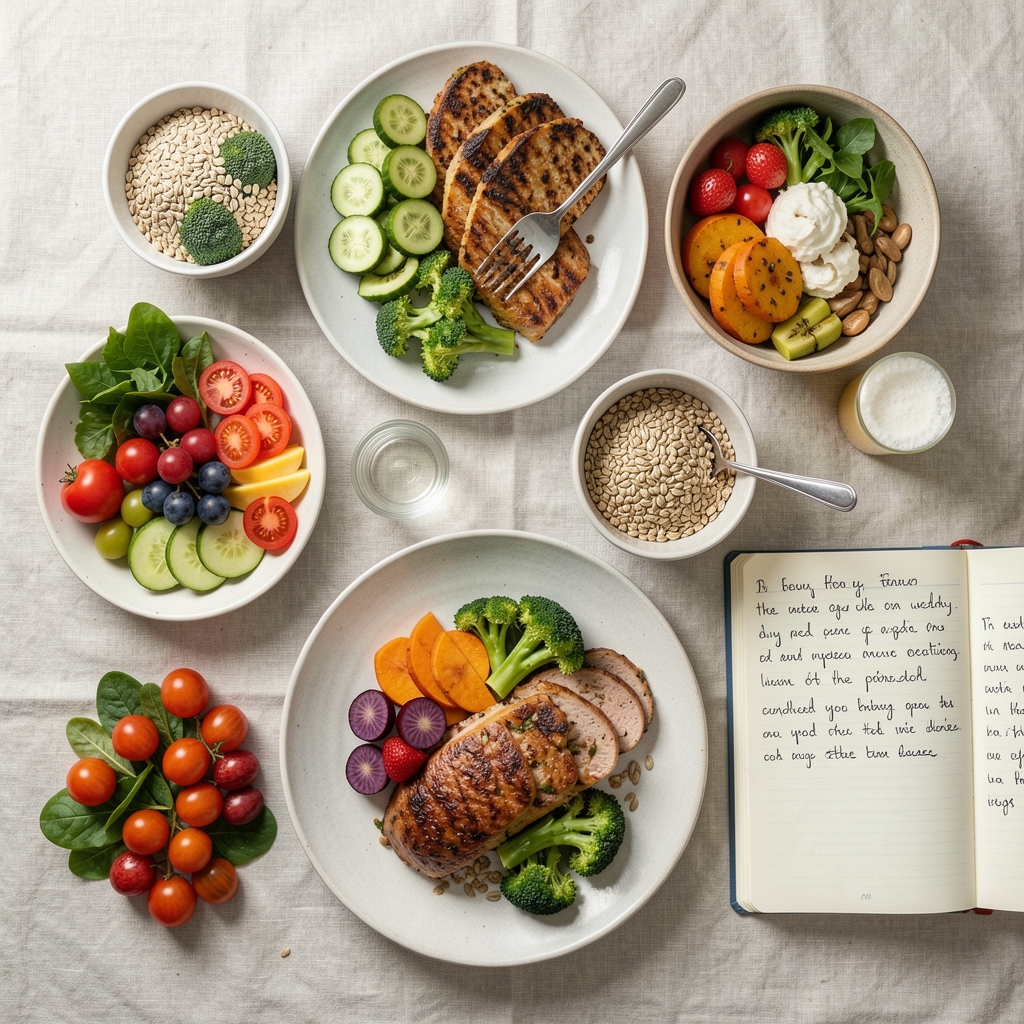
London, January 2026. Across several weeks of detailed food journalling, a pattern emerges that resists the usual explanations: it is not what is eaten on any single day, but the accumulated texture of a whole week — its sequence, its spacing, its irregularities — that most visibly shapes the numbers on a scale.
When nutritional observations are conducted across extended time, the first thing that becomes apparent is that the week itself functions as a unit. Monday carries a different nutritional character than Saturday. The body does not begin each day as a blank account. Whatever happened on Sunday evening — the size of that meal, the hour it was eaten, whether it was accompanied by rest or by physical activity the following morning — carries a traceable consequence into the early part of the following week.
This is not an observation about willpower or restraint. It is, rather, a documentary finding: over the course of forty-eight weeks of journalled eating, the same individual consistently showed different weight trends depending on whether their busiest professional days fell at the beginning or end of the week. The food itself was largely unchanged. The pattern — the rhythm of when and how much — varied significantly.
The implication, observed rather than prescribed, is that the sequencing of meals across a week carries weight-relevant consequences that single-meal analysis cannot capture. A high-fibre breakfast on a Tuesday following a low-movement Monday produces a different observed outcome than the same breakfast on a Thursday following two active days. The food is identical; its context in the weekly rhythm is not.

Field journal — weekly food record, London 2026
Portion awareness, in the context of a weekly rhythm, differs from the conventional framing of portion control. It is less about measurement and more about recognition: the capacity to identify, in the moment of eating, where a given meal sits within the larger pattern of the week. Has today followed a period of below-average intake? Does this meal represent the third consecutive large serving in two days? Is there a movement-heavy afternoon ahead that would make a smaller midday portion inadvisable?
These are not questions that require a spreadsheet to answer. They are questions that, over weeks of consistent food journalling, become intuitive. The purpose of the journal is not the record itself but the habit of attention it builds — the gradual emergence of a conversational relationship with one's own eating patterns, distinct from the anxious monitoring that tends to characterise strict portion counting.
Over the observed period, participants who maintained a weekly food journal — even informally, in plain language rather than numerical notation — demonstrated greater consistency in their weekly caloric distribution than those who did not. The consistency itself, rather than the specific values, appeared to correlate with more stable weight patterns across the quarter.
"A food journal kept honestly for six weeks produces something more useful than a diet: a map of one's own patterns, available to consult and gently redirect."
— Eleanor Whitfield, Tarbolan Letters, January 2026
One of the more durable observations from the journalling period concerns the role of whole foods — minimally processed, recognisably ingredient-forward meals — in structuring a week's eating patterns. The observation is not that whole foods produce weight-relevant outcomes through their nutrient content alone, though that content is worth noting; it is that whole foods require a different kind of engagement with cooking and preparation that itself alters the weekly rhythm.
Cooking a meal from whole ingredients — a soup built from winter vegetables, a grain bowl assembled from items purchased at a Saturday market — takes time and imposes a natural pause before eating. That pause, however modest, produces a different relationship to the meal than opening a prepared container. The smell of the cooking, the decisions made during preparation about seasoning and portion, the small acts of attention that go into even a simple home-cooked meal: these are not nutritionally neutral. They are part of the rhythm.
Across the journalled weeks, meals described in detail — with reference to preparation, time, and context — corresponded to more moderate subsequent portions. Meals described in brief, often prepared without engagement, corresponded to a higher frequency of unplanned additional eating within the same evening. The correlation is observational; it is offered here as a documented pattern, not as a directive.
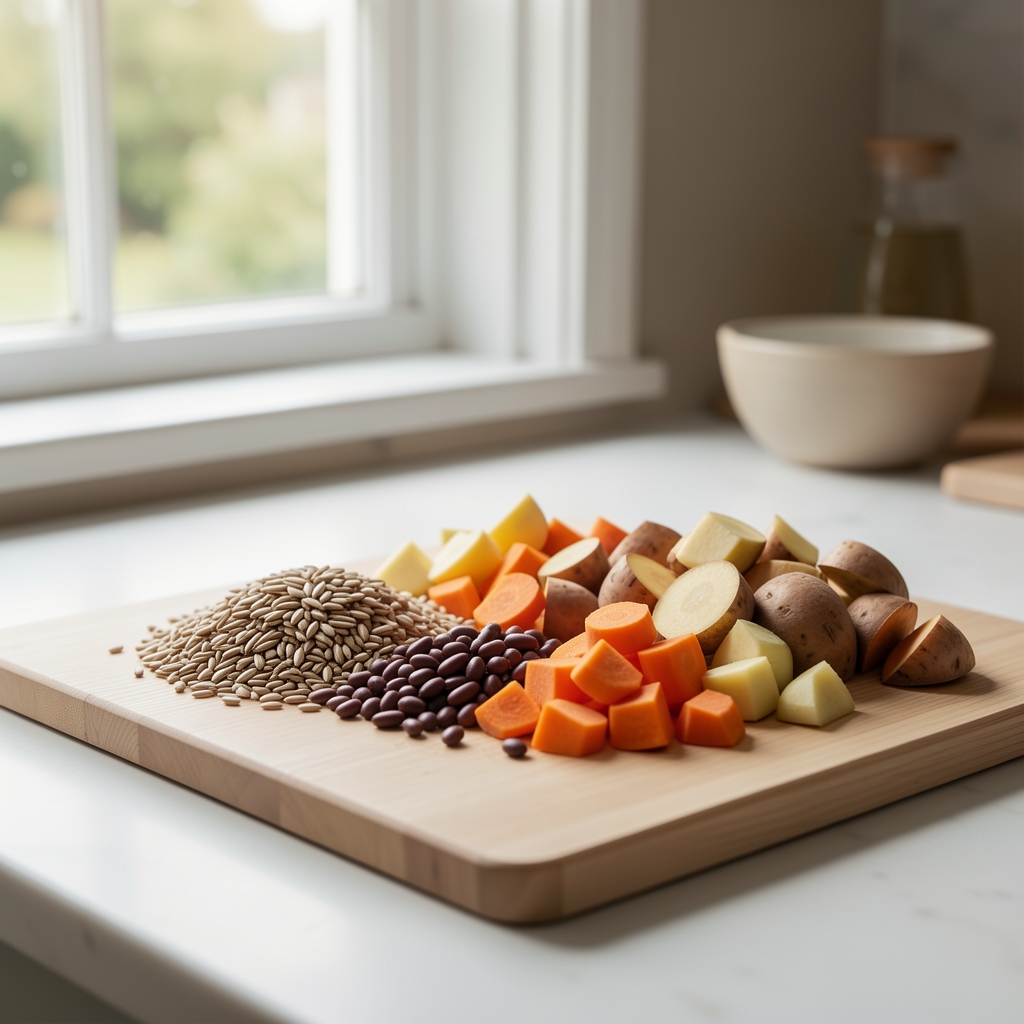
Whole ingredients, midweek preparation — London kitchen, 2026
The transition from weekday to weekend eating patterns represents one of the most consistently documented disruptions in the weekly rhythm. In the observed group, Friday evenings showed a statistically notable departure from the preceding four days in both portion size and food category. Saturday and Sunday presented the widest range of variation across participants — some eating more deliberately than during the week, others less so.
The nutritionally significant observation is not that weekends should be restricted — that would misread the data. The observation is that the week functions as a cycle, and the weekend is a natural inflection point. How the cycle is managed across that inflection — whether Sunday's eating sets up Monday's appetite sensibly, or whether it creates a compounding overconsumption that the week then struggles to absorb — determines much of the weight pattern across a quarter.
Participants who maintained consistent Sunday evening habits — an earlier, lighter meal, a walk of at least thirty minutes, a record of what was eaten — showed the most stable week-on-week weight patterns. The intervention, such as it was, did not concern what they ate for breakfast on Monday. It concerned the rhythm they maintained across the boundary between one week and the next.
The framing of weight change as a gradual, pattern-dependent process rather than an immediate consequence of individual food choices is not a comfortable one for many readers. The culture of weight management, as documented in popular writing and informal conversation, persistently favours the dramatic: the single food to eliminate, the definitive protocol to follow, the measurable outcome within a fixed number of days.
The observations recorded here resist that framing, not from caution but from accuracy. Over forty-eight weeks of documented eating, the clearest correlations with stable, sustained weight patterns were not associated with any specific food category, meal timing protocol, or intermittent restriction approach. They were associated with the quality of attention brought to the week as a whole — the presence of a recognisable rhythm, observed and adjusted rather than strictly controlled.
Tarbolan Letters does not advocate for any specific nutritional programme. The publication's interest is in the documented patterns that emerge when food choices and weight are observed together across time — not in prescribing a path, but in making the terrain legible.
Articles published here are editorial in nature and reflect the writers' observations on everyday nutrition and weight awareness. The content is not intended as personal guidance for the handling of any specific condition. Readers with specific concerns about their daily routines are encouraged to speak with a qualified wellness professional.

Eleanor Whitfield is the founding editor of Tarbolan Letters and a qualified nutrition professional based in London. She has maintained a weekly food journal since 2019 and writes on the intersection of eating patterns, seasonal produce, and everyday weight awareness.
More from Eleanor Whitfield →